
Turn Story Time Into a Vocabulary Superpower
Story time can be cozy and practical at the same time. When we share a book with a curious preschooler, we are not just filling a few quiet minutes. We are helping them learn the words they will use in school, in friendships, and in everyday conversations. Rhythmic phrases, repeated lines, and playful sounds can all support the growth of their language skills.
Rhythmic storybooks add an extra layer of support. Their patterned language and repeated lines make new words easier to notice, remember, and try out. When a phrase appears again and again, it invites children to join in. This participation is where vocabulary starts to grow, because children hear and say the same useful words many times. This guide explains how rhythm supports young children’s language development, what to look for when choosing kids’ storybooks online, and simple ways to use books to build strong vocabularies.
How Rhythm Supports Early Brain and Language Growth
Young children naturally look for patterns. They clap, sway, and chant long before they can read print on a page. Rhythmic stories fit this interest in patterns. When language follows a clear structure, children can start to predict what comes next and pay closer attention to each word.
Here is how that helps vocabulary and early reading skills:
- Predictable patterns make sentences feel familiar and easier to follow
- Repeated phrases give children a model they can copy and practice
- Clear, regular stress on syllables helps break longer words into manageable parts
Rhythm also slows language down in a helpful way. When adults read patterned text, they often stretch sounds, pause at certain points, and repeat key lines. This draws attention to individual words. A child may hear a new word several times, each time linked to the same pattern and picture. That consistency helps the word stick in memory.
Because rhythmic books are engaging to listen to, children often stay focused for longer. They start to wait for familiar lines and enjoy saying them with the reader. That sustained attention leads to more exposure to rich language, which is essential for building a strong vocabulary and later reading comprehension.
Building Bigger Vocabularies Through Playful Repetition
Repetition can feel dull to adults, but to preschoolers it feels safe and enjoyable. When a word or phrase repeats in a story, it gives children multiple chances to hear it and say it without pressure. They are not in a lesson; they are participating in a story.
Rhythmic stories are especially effective when they include:
- A small set of key phrases that appear throughout the book
- New or more advanced words included within those familiar phrases
- Simple patterns children can predict and complete on their own
Playful characters and imaginative events deepen word learning. When a curious dog, a silly melon, or another friendly character runs, splashes, or tumbles across the page, children connect new vocabulary to actions and emotions. Words become linked to what the character does and how the scene feels, which makes meaning clearer and easier to remember.
Parents can extend vocabulary during read-alouds by:
- Pausing to point at a picture while saying a new word slowly
- Giving a brief, child-friendly explanation, such as “enormous means really, really big”
- Asking, “What do you think will happen next?” and then suggesting a new word if the child needs support
These interactions do not need to be long. Even a short pause to label something or to repeat an interesting phrase gives the brain another chance to process and store that word.
Choosing Rhythmic Kids’ Storybooks Online with Care
When we browse kids’ storybooks online, many covers look appealing and many titles sound exciting. To support language growth, it helps to look more closely at how the text is written.
Strong rhythmic books for preschoolers usually include:
- Clear, regular patterns in the sentences that are easy to follow
- Short, straightforward lines that are simple to repeat
- Mostly age-appropriate vocabulary with a few more challenging “stretch” words
Illustrations also play a key role. Clear, focused pictures help children connect new words to concrete images. For example, if the text uses the word “puddles,” and the illustration shows a character jumping into large blue pools of water, the meaning becomes obvious. Choosing books where each page presents only a few ideas can prevent young readers from feeling overloaded and helps them concentrate on specific words.
Lively characters and simple, engaging plots encourage rereading, and rereading is crucial for vocabulary growth. Some families also enjoy using matching coloring pages or simple games related to the book. Seeing and using the same words in different activities, such as coloring, talking, and playing, reinforces vocabulary and helps children recall it later.
Bringing Sadie and Seeds Adventures Into Everyday Learning
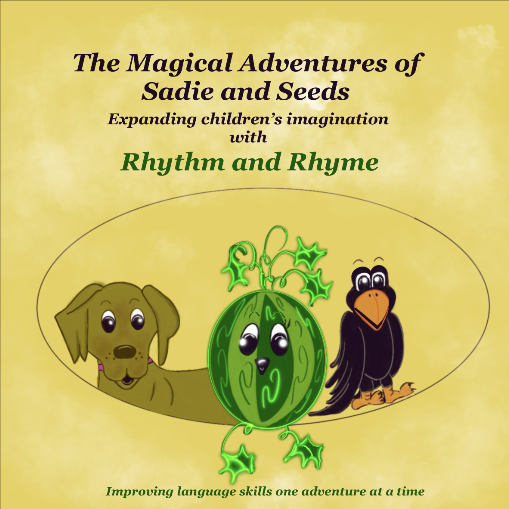
The Magical Adventures of Sadie and Seeds is designed with these language principles in mind. A playful dog and her melon friend move through rhythmic, imaginative adventures that introduce new words within familiar patterns. Because the language follows a predictable structure, children quickly learn where each phrase appears and often feel confident joining in.
Parents can use Sadie and Seeds to support vocabulary and early reading skills by:
- Acting out favorite scenes with stuffed animals or toys while repeating key words from the story
- Drawing or coloring characters and objects while naming and describing them
- Creating simple “missions,” such as finding objects at home that match words from the book (for example, something that splashes, something that rolls, or something that shines)
These activities help children hear, see, and use the same words in different settings. On warm days outside or during long car rides, a book in a backpack, a printed coloring page at the table, or a quick retelling of a scene at bedtime can keep Sadie and Seeds, and the vocabulary from their adventures, active in your child’s mind.
Simple Parent Habits That Turn Stories Into Word-Rich Days
Great vocabulary growth often comes from small, steady routines. When stories appear in short, regular moments throughout the day, children start to see words as a normal part of life, not just something that belongs in a classroom.
Helpful habits include:
- Reading aloud every day, even for just ten minutes
- Rereading favorite rhythmic books until your child can join in on familiar lines
- Pausing before well-known phrases so your child can supply the missing words
Parents can also bring book language into everyday conversations. If a character splashes, stomps, or zooms in the story, adults can use those same words at the sink, on a walk, or at the playground. Saying things like, “You are zooming the way the dog does in the book,” helps children connect new words to their own actions, which strengthens understanding and recall.
When families choose rhythmic kids’ storybooks online with care and combine them with simple, hands-on moments, they create a home environment rich in language. Over time, those repeated patterns, familiar phrases, and shared conversations build a strong vocabulary foundation that supports reading, social interaction, and future learning.
Inspire Your Child’s Imagination With a New Reading Adventure
At The Magical Adventure of Sadie and Seeds, we create stories that help kids see everyday moments as magical possibilities. Explore our collection of kids’ story books online and find the perfect next read to spark curiosity, kindness, and creativity. If you have questions or want help choosing a book for your young reader, feel free to contact us anytime.