
Turn Story Time Into a Vocabulary Superpower
Bedtime can feel like a race. Teeth brushed, pajamas on, lights dim, and suddenly there are only a few minutes left before everyone is too tired to talk. Those small minutes still matter. The way we read during that short window can quietly build a child’s vocabulary, listening skills, and love of stories.
Ongoing, rhyming preschool storybooks are one of the best tools for this. When language has a clear pattern of sounds, children lean in, repeat lines, and start to notice new words without it feeling like homework. The key is understanding that not every word in a book pulls the same weight. Some words are simple and familiar, while others are rich and new. Learning how to spot both types helps adults choose the best preschool books for growing language in a gentle way.
Why Rhyming Stories Supercharge Early Word Learning
Young children love patterns. When a story uses rhyme and a consistent sound structure, their brains get helpful cues. They start to guess what comes next, join in on repeated phrases, and say new words out loud.
Rhyming stories support vocabulary and early reading skills in several ways:
- They help children predict sounds and phrases, so they feel confident saying words along with the adult.
- They slow language down just enough for children to hear syllables and tricky sounds.
- They make repeated lines feel fun instead of boring, so key words really stick.
This patterned, predictable feel is great for phonological awareness, which is the skill of hearing and playing with sounds in words. When children echo a catchy line or supply the rhyming word at the end of a sentence, they are practicing the sound-building skills they will use later when they learn to read.
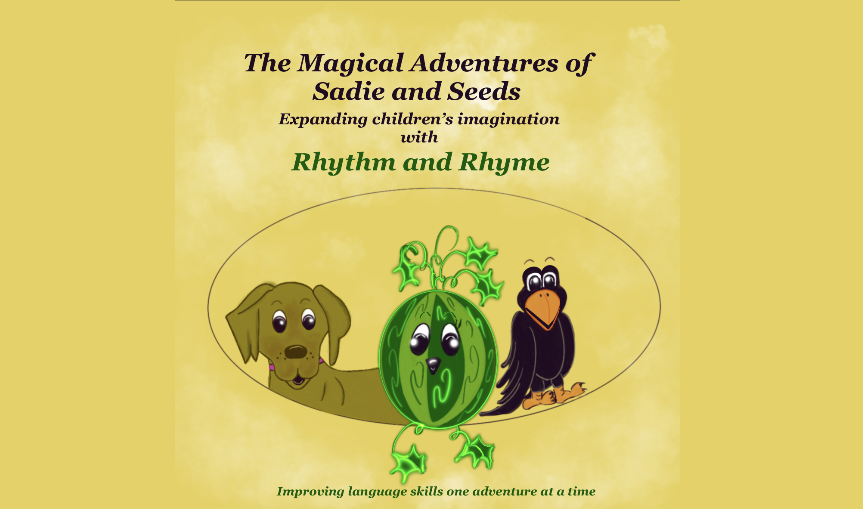
The Magical Adventures of Sadie and Seeds is shaped around this idea. Each story builds on a familiar rhyming experience from one book to the next. As children grow, the pattern stays friendly and predictable, while the adventures and vocabulary keep expanding. The rhyme becomes a gentle path that keeps guiding them toward new words.
Making Sense of Tier 1 and Tier 2 Words for Preschoolers
Not all words are equal for young learners. A helpful way to think about this is the idea of Tier 1 and Tier 2 words.
Tier 1 words are the basics children hear all day long. These might be:
- Dog, cat, ball
- Big, little, happy
- Run, jump, eat
Children usually pick these up in daily life, at the park, at home, or during mealtimes. They are important, but most do not need extra teaching.
Tier 2 words are where the real vocabulary growth happens. These are rich, precise words that appear more often in books than in casual conversation, such as:
- Adventure, journey, explore
- Curious, brave, gentle
- Distant, nearby, beyond
These words stretch thinking. They help children talk about feelings, places, and events in more exact ways. Strong preschool books sprinkle in these Tier 2 words on purpose. They place them inside simple sentences with mostly familiar language, so the new word is easy to notice and understand.
When reading with preschoolers, the goal is not to stuff in as many new words as possible. Instead, it is more effective to offer a gentle blend of easy, everyday Tier 1 words plus a small set of “juicy” Tier 2 words that can be revisited across stories.
A Practical Word-Selection Framework for Story Time
A simple three-step filter can help when choosing or rereading books with young children. Think of it as a quick checklist.
1) Is it easy to read aloud with a clear, consistent pattern of sounds?
If the lines feel smooth in your mouth, you will be more expressive. When you enjoy reading it, children feel that too.
2) Does it have mostly familiar words with a handful of “juicy” Tier 2 words?
Flip through a few pages and see if you can spot some rich words mixed into simple sentences. Only a few per book are needed.
3) Does the story continue or connect across books so words can reappear and stick?
Ongoing series are great for this. When the same characters meet “adventure,” “curious,” or “magical” moments across different stories, children see those words used in many ways.
The Magical Adventures of Sadie and Seeds was developed with this pattern in mind. Sadie, a curious lab, and her melon friend Seeds keep showing up in new settings, but many key words repeat across adventures. Children feel safe in the familiar structure, which frees up their minds to explore new vocabulary.
To keep it simple during reading, a “3-to-5 Word Focus” rule can help:
- On each reread, pick three to five Tier 2 words to highlight.
- Say them a bit slower or with extra expression.
- Give a quick, child-friendly hint like “curious means wanting to know more.”
- Act them out when possible, such as showing what “brave” looks like with your body.
Your 5-minute Parent Read-Aloud Routine
A short, steady routine often does more for vocabulary than a long, occasional read. Here is a pattern that fits into busy evenings.
Minute 1: Book walk
- Look at the cover together.
- Point to the main characters.
- Ask, “What do you think might happen?” or “Where do you think they are going?”
Minutes 2, 3: Read aloud with expression
- Read the story in a comfortable, clear voice.
- Pause slightly on your chosen Tier 2 words.
- Give a tiny hint in the moment, like “distant means far away.”
Minutes 4, 5: Quick chat and playful movement
- Ask two or three simple questions.
- Add one fun movement or sound that matches the story.
Here are prompts that work well with rhyming stories:
- “What new word did we hear tonight?”
- “Can you show me what curious looks like with your face or body?”
- “Where else could Sadie have an adventure?”
This small routine builds attention span, listening skills, and word knowledge at the same time. When families return to the same series, children start to recognize familiar sound patterns, remember past adventures, and notice when repeated Tier 2 words appear again.
Example Prompts to Grow Words as Stories Grow
As stories build across an ongoing series, questions can also build. The style of the questions stays the same, but the answers change with each new adventure.
Try character prompts like:
- “What kind of friend is Sadie here?”
- “How did Seeds feel in this part?”
Use word and meaning prompts:
- “We heard the word ‘adventure’ again. What made this part an adventure?”
- “Which part felt the most magical today?”
Add connection prompts:
- “Did we see this word in the last Sadie book too?”
- “Did anything like this happen in our day?”
Asking the same types of questions across different books helps children meet the same Tier 2 words in fresh ways. That repeated, slightly changed practice is what really builds deep understanding.
This can become even more concrete with a small “Sadie Word List” on the fridge. Each time you read, add one or two strong new words. Children can:
- Draw a picture of the word.
- Act it out during a quick “word show.”
- Try using it in a simple home sentence.
Over time, those words start to feel like part of family language, not just something that lives in a book.
Make Rhyme and Words Your Daily Adventure
When families choose one or two rhyming series and return to them regularly, story time becomes its own growing world. Instead of chasing the next “best preschool books” trend, they build a steady, comforting experience where familiar characters meet new words and new situations.
The Magical Adventures of Sadie and Seeds was created to be that kind of ongoing, rhyming experience. As the seasons warm in spring and early summer, it can be fun to start a simple “story challenge” at home: five minutes of read-aloud on weeknights, with just one or two new Tier 2 words to notice each week. Over time, those small moments add up, giving children a strong base for reading, speaking, and joyful learning that keeps growing right along with them.
Inspire Your Preschooler’s Imagination With the Right Stories Today
If you are looking for engaging stories that nurture curiosity and kindness, our collection of best preschool books is a great place to start. At The Magical Adventure of Sadie and Seeds, we carefully create books that help little readers explore big feelings in a gentle, joyful way. Browse our titles to find the perfect next read for your child, and if you have questions about choosing the right book, feel free to contact us.